Everything can be associated with everything else—especially today—but it is by no means irrelevant whether we do so as a statement or as a question. The traditional conception of time, according to which time flows linearly from the past toward the future, with the present moment serving as the point of intersection where we find ourselves, is, according to the French philosopher Henri Bergson, mistaken. If we wish to grasp time in an exact manner, as Bergson suggests, then we must not conceive of it in relation to the physical world. For time is primarily internal (made internal) time, the time experienced by the individual.
Objects, people, and phenomena with which we come into contact during our lives are inscribed in our memory; depending on their importance or insignificance, they are etched into our minds or fade away. We can speak of “affected forgetting” when things reveal themselves in their true nature to conscious perception and sensory apprehension, then settle into a designated place in personal memory, thereby surrendering themselves to the ceaseless cycle of recollection and forgetting.
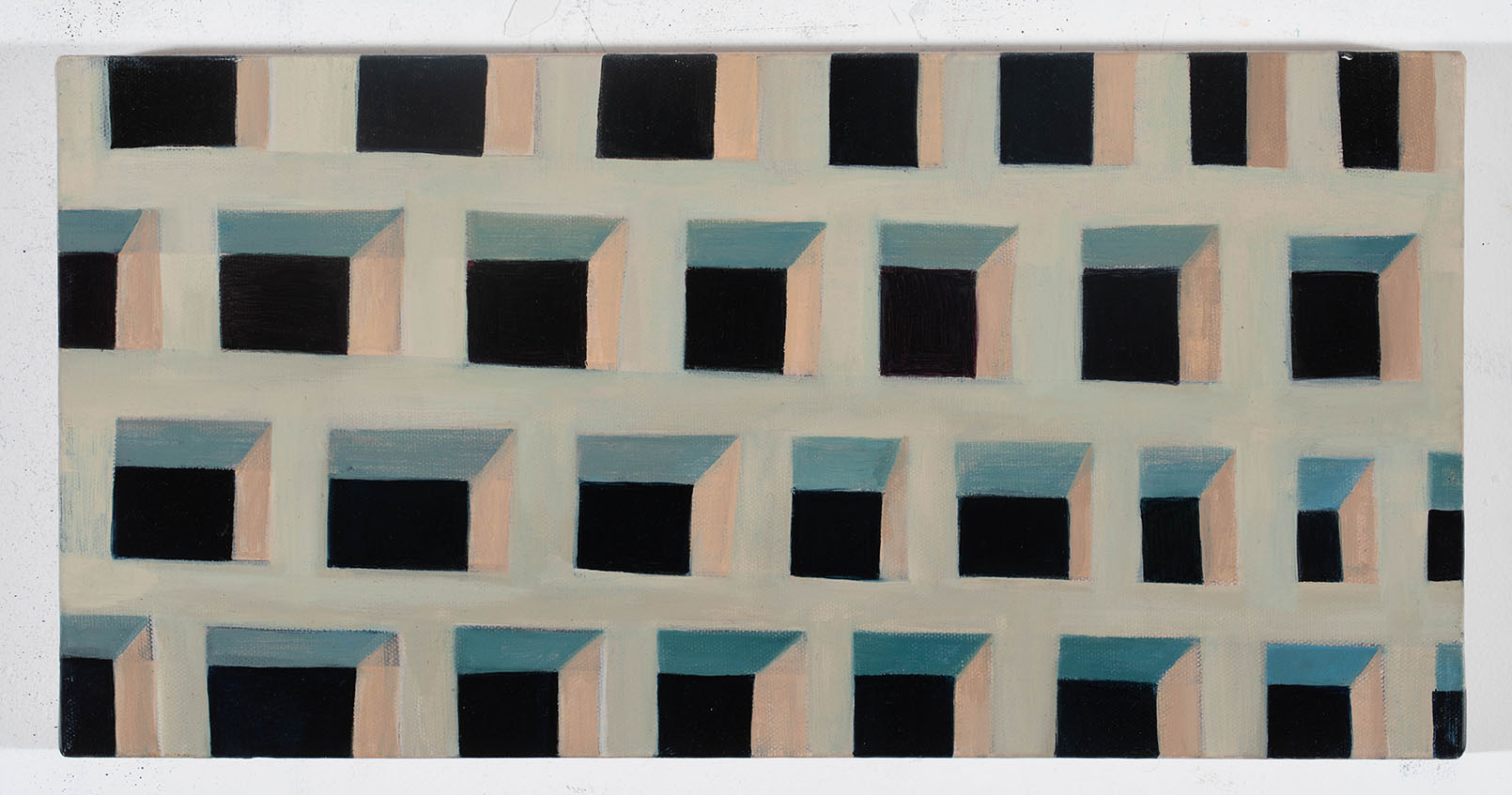
Teréz Szilágyi created the work titled *Time Held in the Hand* for a joint college exhibition titled *Impossible, or the Struggle to Objectify the Concept*, which was held at the Artpool Art Research Center in 2001. She later presented this work, still in the same year, at the Óbuda Social Club’s exhibition space, where she also included a text fragment, thus changing the title of the work to *Time Held in the Hand*.
One day, Teréz Szilágyi spotted a miniature replica of a bathtub in the window of an antique shop, presumably made for a dollhouse. Over time, this originally neutral toy became a memento of something that is now an integral part of her memory, and which she was able to associate with her work painted on a flat surface, on canvas. This tiny bathtub behaved in her memory much like the collective consciousness of the characters in Arundhati Roy’s novel *The God of Small Things*: “They knew that things could change in a single day.”
In this way, Teréz Szilágyi succeeded in presenting an initially elusive memory as a memento. Returning to Bergson, philosopher and dance educator Valéria Dienes writes the following about the philosopher’s early theory of time: “It functions in intimate connection with memory, and for this very reason it is always identified with the true preservation of the past, with the unique and unrepeatable memory of each of our experiences. […] Our ordinary memory almost always arises from the interplay of the two [bodily memory and the memory of the past].”
Ármin Tillmann