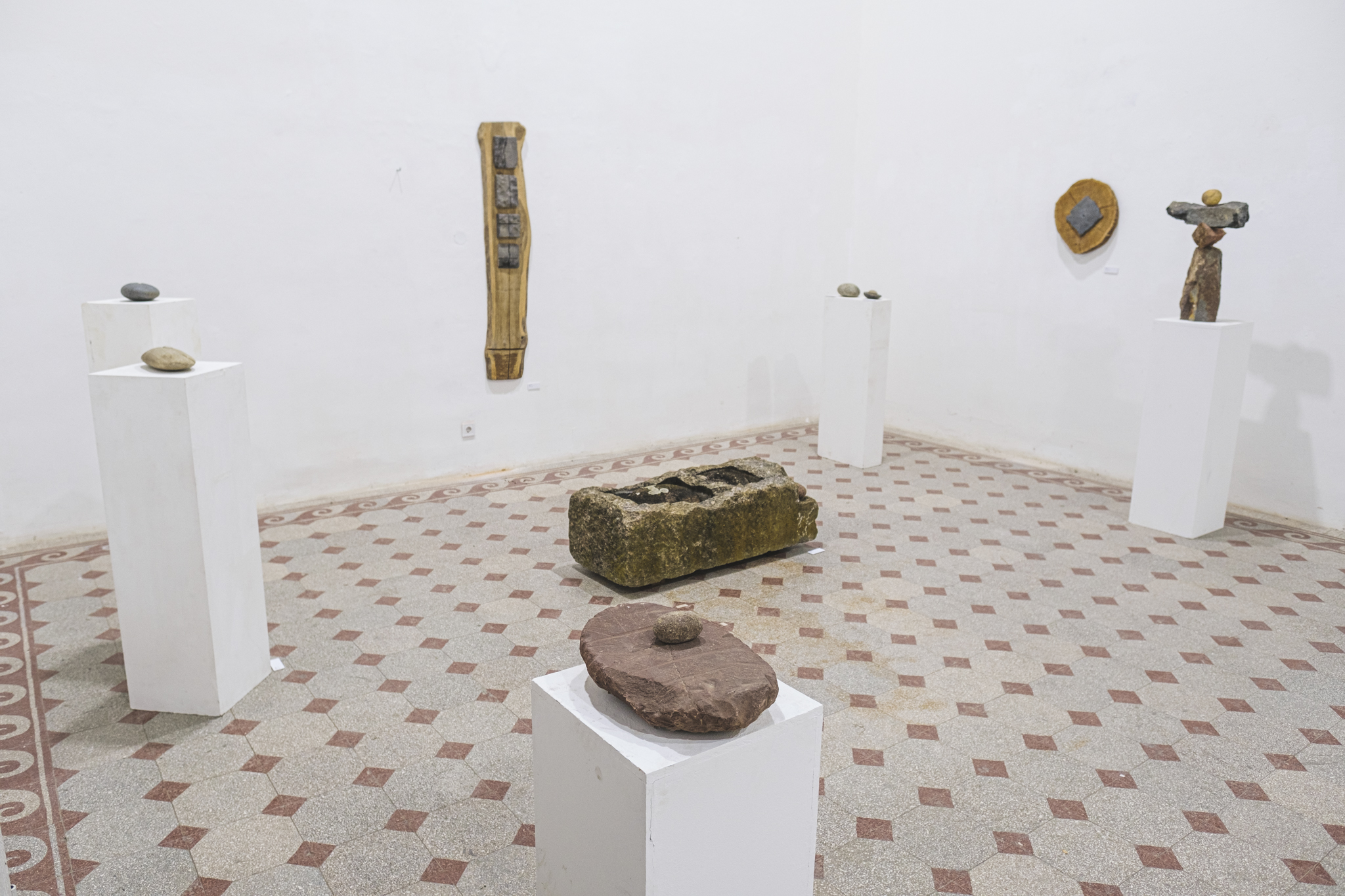
As a result of my sculptural work and research into art theory, I have come to the following conclusion:
1. For me, the abstract concept of sculpture (i.e., the image) is equivalent to the ontological richness of sculpture, but also of art in general.
2. This realization provided an answer to the question I had asked myself: How can an impulse that does not essentially originate from this realm of existence inspire an activity (sculpture) that is bound to the order of the transient world? How can a work of art be shaped by the power of divine life and its laws?
3. How can I, as a sculptor, intervene less and less in reality and instead allow space for things to reveal themselves?
4. During my research, I became convinced that “human creative activity must fall under the power of God.” Instead of being motivated by the senses, it must somehow become pneumatically controlled.
5. I believe that sculptors cannot deny the teleological, ontological, archetypal origins of stone sculpture; they must recognize that stone gradually reveals its own completeness. There is a process here that wants to separate itself from human artistic influence with benevolent force, an independent creative force that nevertheless loves to express itself under human hands. In other words, there is a sensitive boundary to my competence that I cannot cross. This is where the sacred separates itself from the common.
6. The spirit does not tolerate mechanical processes. Life and death must appear together in the work; only in this way can the sculptor reinterpret himself.
In the deepest darkness of the spirit
I am a shining light
This divine spark is the basis of my existence
the heavenly light of my essence
excerpt from Zoltán Balanyi’s own Ars poetica