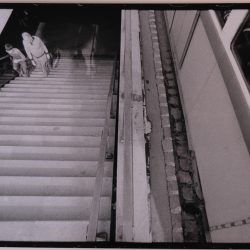
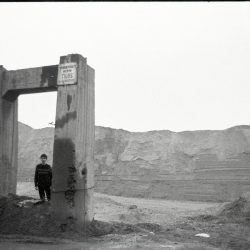
The exhibition aims to present visual impressions of the urban landscape through neo-avant-garde and subjective documentary photographs taken between 1974 and 1989. According to the exhibition concept, the progressive photographic vision of the era and the visual image of the city are presented as one, with the aim of capturing both the artistic and urban historical perspectives.
The term “urban landscape” refers to several aspects: on the one hand, the interpretation of the city as a unique landscape, and on the other hand, the complex concept of landscape, which can be defined as a formation shaped by the natural, built, and social environment. The starting date of 1974 is fundamentally linked to the emergence of a young generation of form-innovators in Hungarian photography: this was when the first photographic works representing these new creative endeavors were produced. The closing date of 1989 primarily marks a political and historical dividing line for us, and not least the approximate transition from analog to digital photography. The structure of the exhibition is not chronological, but organized thematically and reflexively according to visual content and mode of expression, creating a discursive space between photos with different perspectives that speaks to the conceptual aspirations of those who view the urban landscape.
The vast majority of the approximately 160 photographs on display are unknown or only known and published to a limited audience. They offer visitors a collection of images with a visual aspect of the familiar, used, and lived-in urban space, which on the one hand creates an opportunity to rearrange memory images based on personal experience, and on the other hand, promises the novelty of discovery about the local environment of our recent past.
Vintage copies and new enlargements by the following artists will be on display at the exhibition: Imre Benkő, Imre Drégely, Bálint Flesch, József Hajdú, István Halas, Gusztáv Hámos, László Haris, Antal Jokesz, Gábor Kerekes, János Szerencsés, Lenke Szilágyi, Péter Tímár, and Magdolna Vékás.